Product, Order & General Inquiries +1 (800) 663-7845 (8am-4:30pm PST)

Call ACR Now
Call ACR: 1-800-663-7845
North America: 1-800-663-7845
International: +1-604-591-1128
Mon–Fri 8:30 AM – 4:30 PM PT
Understanding Low Pressure Differential Measurements
Low pressure differential measurements are commonly used to evaluate how air moves through buildings and HVAC systems. These small pressure differences—often measured in inches of water column—help indicate whether spaces are positively or negatively pressurized, how effectively air is distributed through ductwork, and how systems respond under real operating conditions.
Because these effects are often subtle and time-dependent, spot measurements alone may not reveal the full picture.
Logging Pressure Trends Over Time
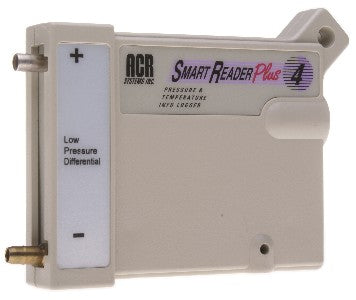
The SmartReader Plus 4 LPD is designed to record low pressure differential continuously over extended periods. By capturing pressure trends over hours, days, or weeks, the logger helps reveal system behavior during occupied and unoccupied periods, equipment cycling, and changing environmental conditions.
This time-based view allows users to identify patterns, verify system performance, and diagnose issues that would be difficult to detect with handheld instruments.
Built-In Sensors for Contextual Analysis
The SmartReader Plus 4 LPD incorporates an internal low pressure differential sensor along with an internal temperature sensor. Recording temperature alongside pressure provides important context when analyzing data, helping distinguish true system changes from effects related to thermal variation or operating schedules.
This combination is particularly useful in HVAC and building performance applications, where temperature and pressure are closely linked.
Typical Applications
The SmartReader Plus 4 LPD is commonly used in applications such as:
-
Room-to-room and building pressurization studies
-
Verification of positive or negative pressure in critical spaces
-
HVAC commissioning and re-commissioning
-
Testing and balancing (TAB) verification
-
HVAC duct static pressure monitoring
-
Airflow analysis when used with differential pressure-based measurement methods
-
Troubleshooting comfort complaints, drafts, or infiltration issues
Selecting the Appropriate Pressure Range
Multiple low pressure ranges are available, allowing the logger to be matched to the application:
-
Lower pressure ranges are typically used for room-level and building pressurization measurements.
-
Higher pressure ranges, such as ±10 inWC, are commonly used for HVAC duct static pressure monitoring and airflow analysis.
Selecting the appropriate range improves resolution and measurement accuracy while ensuring reliable operation under expected pressure conditions.
Designed for Temporary Studies and Field Use
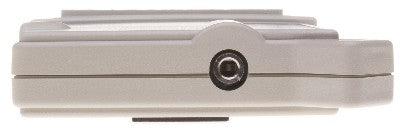
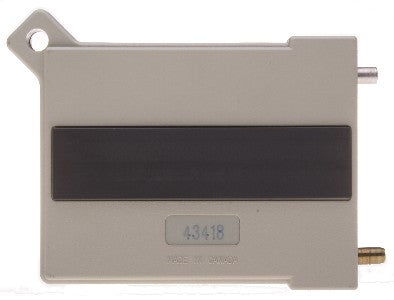
Compact, self-contained, and battery powered, the SmartReader Plus 4 LPD is well suited for temporary studies, commissioning work, and troubleshooting tasks where reliable pressure trend data is required without permanent installation. Magnetic mounting and simple pressure connections make the logger easy to deploy in the field and remove once a study is complete.
Specifications
| Accuracy: | Calibrated: +/- 0.05” for 0.5”, 1.0” and 2.0” ranges +/- 0.1” for 5.0” and 10.0” ranges Thermal: +/- 0.5% FS (over compensated range) |
| Hysteresis & Repeatability: | +/- 0.05% FS (typical) |
| Long-Term Stability: | +/- 0.5% FS |
| Media: | Non-corrosive gases and dry air |
| Non-linearity: | +/- 0.05% FS (best fit straight line) |
| Pressure Ranges: | +/- 125Pa (0.5inWC) +/- 250Pa (1.0inWC) +/- 500Pa (2.0inWC) +/- 1.25kPa (5.0inWC) +/- 2.5kPa (10inWC) |
| Resolution: | < 2.5Pa (0.01inWC) |
| Sensor Type: | Silicone piezoresistive strain gauge |
| Warranty: | 3 – years |
Accessories
Software & Interface Cable are required for full functionality of the product.
1/4" hose - high pressure 1/4" hose - standard pressure Weatherproof Box
Software
ACR software tools are intuitive and flexible, allowing you to easily configure ACR data loggers to collect the data you need. Once downloaded, your data is displayed in presentation-quality graphs and can be converted into popular formats for use with spreadsheet programs, document editors, and other third-party applications.
TrendReader Full License TrendReader Interface Pkg TrendReader on USB Full
Documentation
For a product sheet, please click below for a pdf version.
A link to the Manual is available by clicking on the button below.
Calibration
Data loggers are often used in highly regulated environments such as food and pharmaceutical production and storage where strict safety regulations apply. Regulatory agencies generally require proof of calibration.
ACR calibrations are performed using reference standards that have been calibrated and are traceable to the US National Institute of Standards & Technology (NIST). This ensures that all ACR data loggers meet, and perform to, their published specifications, allowing you to be confident that they will assist you in achieving your compliance requirements.
Calibration certificates are provided with every calibration we perform. ACR Systems is an ISO 9001:2015 registered company and calibration records are kept as part of our quality system and can be made available for customer audits.
{"id":6149855314091,"title":"SmartReader Plus 4 LPD Low Pressure Differential Logger","handle":"smartreader-plus-4-lpd","description":"\u003cp\u003e \u003c\/p\u003e\n\u003ch3\u003eUnderstanding Low Pressure Differential Measurements\u003c\/h3\u003e\n\u003cp\u003eLow pressure differential measurements are commonly used to evaluate how air moves through buildings and HVAC systems. These small pressure differences—often measured in inches of water column—help indicate whether spaces are positively or negatively pressurized, how effectively air is distributed through ductwork, and how systems respond under real operating conditions.\u003c\/p\u003e\n\u003cp\u003eBecause these effects are often subtle and time-dependent, spot measurements alone may not reveal the full picture.\u003c\/p\u003e\n\u003ch3\u003eLogging Pressure Trends Over Time\u003c\/h3\u003e\n\u003cp\u003eThe SmartReader Plus 4 LPD is designed to record low pressure differential continuously over extended periods. By capturing pressure trends over hours, days, or weeks, the logger helps reveal system behavior during occupied and unoccupied periods, equipment cycling, and changing environmental conditions.\u003c\/p\u003e\n\u003cp\u003eThis time-based view allows users to identify patterns, verify system performance, and diagnose issues that would be difficult to detect with handheld instruments.\u003c\/p\u003e\n\u003ch3\u003eBuilt-In Sensors for Contextual Analysis\u003c\/h3\u003e\n\u003cp\u003eThe SmartReader Plus 4 LPD incorporates an internal low pressure differential sensor along with an internal temperature sensor. Recording temperature alongside pressure provides important context when analyzing data, helping distinguish true system changes from effects related to thermal variation or operating schedules.\u003c\/p\u003e\n\u003cp\u003eThis combination is particularly useful in HVAC and building performance applications, where temperature and pressure are closely linked.\u003c\/p\u003e\n\u003ch3\u003eTypical Applications\u003c\/h3\u003e\n\u003cp\u003eThe SmartReader Plus 4 LPD is commonly used in applications such as:\u003c\/p\u003e\n\u003cul\u003e\n\u003cli\u003e\n\u003cp\u003eRoom-to-room and building pressurization studies\u003c\/p\u003e\n\u003c\/li\u003e\n\u003cli\u003e\n\u003cp\u003eVerification of positive or negative pressure in critical spaces\u003c\/p\u003e\n\u003c\/li\u003e\n\u003cli\u003e\n\u003cp\u003eHVAC commissioning and re-commissioning\u003c\/p\u003e\n\u003c\/li\u003e\n\u003cli\u003e\n\u003cp\u003eTesting and balancing (TAB) verification\u003c\/p\u003e\n\u003c\/li\u003e\n\u003cli\u003e\n\u003cp\u003eHVAC duct static pressure monitoring\u003c\/p\u003e\n\u003c\/li\u003e\n\u003cli\u003e\n\u003cp\u003eAirflow analysis when used with differential pressure-based measurement methods\u003c\/p\u003e\n\u003c\/li\u003e\n\u003cli\u003e\n\u003cp\u003eTroubleshooting comfort complaints, drafts, or infiltration issues\u003c\/p\u003e\n\u003c\/li\u003e\n\u003c\/ul\u003e\n\u003ch3\u003eSelecting the Appropriate Pressure Range\u003c\/h3\u003e\n\u003cp\u003eMultiple low pressure ranges are available, allowing the logger to be matched to the application:\u003c\/p\u003e\n\u003cul\u003e\n\u003cli\u003e\n\u003cp\u003eLower pressure ranges are typically used for room-level and building pressurization measurements.\u003c\/p\u003e\n\u003c\/li\u003e\n\u003cli\u003e\n\u003cp\u003eHigher pressure ranges, such as ±10 inWC, are commonly used for HVAC duct static pressure monitoring and airflow analysis.\u003c\/p\u003e\n\u003c\/li\u003e\n\u003c\/ul\u003e\n\u003cp\u003eSelecting the appropriate range improves resolution and measurement accuracy while ensuring reliable operation under expected pressure conditions.\u003c\/p\u003e\n\u003ch3\u003eDesigned for Temporary Studies and Field Use\u003c\/h3\u003e\n\u003cp\u003eCompact, self-contained, and battery powered, the SmartReader Plus 4 LPD is well suited for temporary studies, commissioning work, and troubleshooting tasks where reliable pressure trend data is required without permanent installation. Magnetic mounting and simple pressure connections make the logger easy to deploy in the field and remove once a study is complete.\u003c\/p\u003e","published_at":"2020-12-18T20:41:53-08:00","created_at":"2020-12-18T20:41:53-08:00","vendor":"ACR Systems","type":"","tags":["SmartReader Plus Family"],"price":92500,"price_min":92500,"price_max":92500,"available":true,"price_varies":false,"compare_at_price":null,"compare_at_price_min":0,"compare_at_price_max":0,"compare_at_price_varies":false,"variants":[{"id":37839112994987,"title":"LPD-0.5\" - 32 KB (01-0310)","option1":"LPD-0.5\" - 32 KB (01-0310)","option2":null,"option3":null,"sku":"01-0310","requires_shipping":true,"taxable":true,"featured_image":null,"available":true,"name":"SmartReader Plus 4 LPD Low Pressure Differential Logger - LPD-0.5\" - 32 KB (01-0310)","public_title":"LPD-0.5\" - 32 KB (01-0310)","options":["LPD-0.5\" - 32 KB (01-0310)"],"price":92500,"weight":0,"compare_at_price":null,"inventory_management":null,"barcode":null,"requires_selling_plan":false,"selling_plan_allocations":[],"quantity_rule":{"min":1,"max":null,"increment":1}},{"id":37839113027755,"title":"LPD-1\" - 32 KB (01-0311)","option1":"LPD-1\" - 32 KB (01-0311)","option2":null,"option3":null,"sku":"01-0311","requires_shipping":true,"taxable":true,"featured_image":null,"available":true,"name":"SmartReader Plus 4 LPD Low Pressure Differential Logger - LPD-1\" - 32 KB (01-0311)","public_title":"LPD-1\" - 32 KB (01-0311)","options":["LPD-1\" - 32 KB (01-0311)"],"price":92500,"weight":0,"compare_at_price":null,"inventory_management":null,"barcode":null,"requires_selling_plan":false,"selling_plan_allocations":[],"quantity_rule":{"min":1,"max":null,"increment":1}},{"id":37839113093291,"title":"LPD-2\" - 32 KB (01-0312)","option1":"LPD-2\" - 32 KB (01-0312)","option2":null,"option3":null,"sku":"01-0312","requires_shipping":true,"taxable":true,"featured_image":null,"available":true,"name":"SmartReader Plus 4 LPD Low Pressure Differential Logger - LPD-2\" - 32 KB (01-0312)","public_title":"LPD-2\" - 32 KB (01-0312)","options":["LPD-2\" - 32 KB (01-0312)"],"price":92500,"weight":0,"compare_at_price":null,"inventory_management":null,"barcode":null,"requires_selling_plan":false,"selling_plan_allocations":[],"quantity_rule":{"min":1,"max":null,"increment":1}},{"id":37839113126059,"title":"LPD-5\" - 32 KB (01-0313)","option1":"LPD-5\" - 32 KB (01-0313)","option2":null,"option3":null,"sku":"01-0313","requires_shipping":true,"taxable":true,"featured_image":null,"available":true,"name":"SmartReader Plus 4 LPD Low Pressure Differential Logger - LPD-5\" - 32 KB (01-0313)","public_title":"LPD-5\" - 32 KB (01-0313)","options":["LPD-5\" - 32 KB (01-0313)"],"price":92500,"weight":0,"compare_at_price":null,"inventory_management":null,"barcode":null,"requires_selling_plan":false,"selling_plan_allocations":[],"quantity_rule":{"min":1,"max":null,"increment":1}},{"id":37839113060523,"title":"LPD-10\" - 32 KB (01-0314)","option1":"LPD-10\" - 32 KB (01-0314)","option2":null,"option3":null,"sku":"01-0314","requires_shipping":true,"taxable":true,"featured_image":null,"available":true,"name":"SmartReader Plus 4 LPD Low Pressure Differential Logger - LPD-10\" - 32 KB (01-0314)","public_title":"LPD-10\" - 32 KB (01-0314)","options":["LPD-10\" - 32 KB (01-0314)"],"price":92500,"weight":0,"compare_at_price":null,"inventory_management":null,"barcode":null,"requires_selling_plan":false,"selling_plan_allocations":[],"quantity_rule":{"min":1,"max":null,"increment":1}}],"images":["\/\/www.acrdatasolutions.com\/cdn\/shop\/products\/2702_400_300.jpg?v=1610171601","\/\/www.acrdatasolutions.com\/cdn\/shop\/products\/2706_400_300.jpg?v=1610171645","\/\/www.acrdatasolutions.com\/cdn\/shop\/products\/2709_400_300_0.jpg?v=1610171680"],"featured_image":"\/\/www.acrdatasolutions.com\/cdn\/shop\/products\/2702_400_300.jpg?v=1610171601","options":["Click the Menu for More Models"],"media":[{"alt":null,"id":15547924054187,"position":1,"preview_image":{"aspect_ratio":1.187,"height":300,"width":356,"src":"\/\/www.acrdatasolutions.com\/cdn\/shop\/products\/2702_400_300.jpg?v=1610171601"},"aspect_ratio":1.187,"height":300,"media_type":"image","src":"\/\/www.acrdatasolutions.com\/cdn\/shop\/products\/2702_400_300.jpg?v=1610171601","width":356},{"alt":null,"id":15547925332139,"position":2,"preview_image":{"aspect_ratio":3.053,"height":131,"width":400,"src":"\/\/www.acrdatasolutions.com\/cdn\/shop\/products\/2706_400_300.jpg?v=1610171645"},"aspect_ratio":3.053,"height":131,"media_type":"image","src":"\/\/www.acrdatasolutions.com\/cdn\/shop\/products\/2706_400_300.jpg?v=1610171645","width":400},{"alt":null,"id":15547926085803,"position":3,"preview_image":{"aspect_ratio":1.313,"height":300,"width":394,"src":"\/\/www.acrdatasolutions.com\/cdn\/shop\/products\/2709_400_300_0.jpg?v=1610171680"},"aspect_ratio":1.313,"height":300,"media_type":"image","src":"\/\/www.acrdatasolutions.com\/cdn\/shop\/products\/2709_400_300_0.jpg?v=1610171680","width":394}],"requires_selling_plan":false,"selling_plan_groups":[],"content":"\u003cp\u003e \u003c\/p\u003e\n\u003ch3\u003eUnderstanding Low Pressure Differential Measurements\u003c\/h3\u003e\n\u003cp\u003eLow pressure differential measurements are commonly used to evaluate how air moves through buildings and HVAC systems. These small pressure differences—often measured in inches of water column—help indicate whether spaces are positively or negatively pressurized, how effectively air is distributed through ductwork, and how systems respond under real operating conditions.\u003c\/p\u003e\n\u003cp\u003eBecause these effects are often subtle and time-dependent, spot measurements alone may not reveal the full picture.\u003c\/p\u003e\n\u003ch3\u003eLogging Pressure Trends Over Time\u003c\/h3\u003e\n\u003cp\u003eThe SmartReader Plus 4 LPD is designed to record low pressure differential continuously over extended periods. By capturing pressure trends over hours, days, or weeks, the logger helps reveal system behavior during occupied and unoccupied periods, equipment cycling, and changing environmental conditions.\u003c\/p\u003e\n\u003cp\u003eThis time-based view allows users to identify patterns, verify system performance, and diagnose issues that would be difficult to detect with handheld instruments.\u003c\/p\u003e\n\u003ch3\u003eBuilt-In Sensors for Contextual Analysis\u003c\/h3\u003e\n\u003cp\u003eThe SmartReader Plus 4 LPD incorporates an internal low pressure differential sensor along with an internal temperature sensor. Recording temperature alongside pressure provides important context when analyzing data, helping distinguish true system changes from effects related to thermal variation or operating schedules.\u003c\/p\u003e\n\u003cp\u003eThis combination is particularly useful in HVAC and building performance applications, where temperature and pressure are closely linked.\u003c\/p\u003e\n\u003ch3\u003eTypical Applications\u003c\/h3\u003e\n\u003cp\u003eThe SmartReader Plus 4 LPD is commonly used in applications such as:\u003c\/p\u003e\n\u003cul\u003e\n\u003cli\u003e\n\u003cp\u003eRoom-to-room and building pressurization studies\u003c\/p\u003e\n\u003c\/li\u003e\n\u003cli\u003e\n\u003cp\u003eVerification of positive or negative pressure in critical spaces\u003c\/p\u003e\n\u003c\/li\u003e\n\u003cli\u003e\n\u003cp\u003eHVAC commissioning and re-commissioning\u003c\/p\u003e\n\u003c\/li\u003e\n\u003cli\u003e\n\u003cp\u003eTesting and balancing (TAB) verification\u003c\/p\u003e\n\u003c\/li\u003e\n\u003cli\u003e\n\u003cp\u003eHVAC duct static pressure monitoring\u003c\/p\u003e\n\u003c\/li\u003e\n\u003cli\u003e\n\u003cp\u003eAirflow analysis when used with differential pressure-based measurement methods\u003c\/p\u003e\n\u003c\/li\u003e\n\u003cli\u003e\n\u003cp\u003eTroubleshooting comfort complaints, drafts, or infiltration issues\u003c\/p\u003e\n\u003c\/li\u003e\n\u003c\/ul\u003e\n\u003ch3\u003eSelecting the Appropriate Pressure Range\u003c\/h3\u003e\n\u003cp\u003eMultiple low pressure ranges are available, allowing the logger to be matched to the application:\u003c\/p\u003e\n\u003cul\u003e\n\u003cli\u003e\n\u003cp\u003eLower pressure ranges are typically used for room-level and building pressurization measurements.\u003c\/p\u003e\n\u003c\/li\u003e\n\u003cli\u003e\n\u003cp\u003eHigher pressure ranges, such as ±10 inWC, are commonly used for HVAC duct static pressure monitoring and airflow analysis.\u003c\/p\u003e\n\u003c\/li\u003e\n\u003c\/ul\u003e\n\u003cp\u003eSelecting the appropriate range improves resolution and measurement accuracy while ensuring reliable operation under expected pressure conditions.\u003c\/p\u003e\n\u003ch3\u003eDesigned for Temporary Studies and Field Use\u003c\/h3\u003e\n\u003cp\u003eCompact, self-contained, and battery powered, the SmartReader Plus 4 LPD is well suited for temporary studies, commissioning work, and troubleshooting tasks where reliable pressure trend data is required without permanent installation. Magnetic mounting and simple pressure connections make the logger easy to deploy in the field and remove once a study is complete.\u003c\/p\u003e"}
Translation missing: en.general.search.loading